

You have fled your country. You have left behind your home, your family, your life. You have arrived in France. Lost. You know no one. And now? You need to complete procedures. Understand a complicated system. Fill in paperwork. Wait. Prove. Tell your story again and again of why you cannot go back. It is hard. But yes, you have rights — the right to accommodation, the right to healthcare, the right to support with your procedures, the right to be heard...
In this article, you will understand your rights. You will discover the structures that can help you. Step by step.

Step 1: Present yourself at the prefecture
As soon as you arrive in France, you must go to the prefecture to state that you are seeking asylum. This is called "presenting yourself at the one-stop desk".
At the prefecture, you will receive:
- An asylum application certificate
- An appointment with the OFII (Office Français de l'Immigration et de l'Intégration)
Step 2: Registration with the OFII
The OFII will:
- Take your fingerprints
- Verify that France is the country responsible for your application (Dublin regulation)
- Provide information about the procedure
- Offer accommodation if places are available
Step 3: Complete your OFPRA file
You have 21 days to send your complete file to the OFPRA (Office Français de Protection des Réfugiés et Apatrides). This file is essentially your story. Why you left your country. Why you cannot go back. The dangers you face.
🚨 Important: Do not complete this file alone. Get help from an association. It is free, and very important.
If you are an asylum seeker, you have the right to accommodation. This is managed by the OFII.
🚨 Important: there may not be enough places for everyone. Many asylum seekers end up on the streets while waiting for a place.
If you have no place:
- Call 115 (emergency accommodation)
- Contact associations that house asylum seekers
- Go to day centres
The ADA is a financial allowance while you wait for the response to your asylum application. Amounts in 2025:
- Approximately €6.80 per day for a single person
- More if you have children
- Less if you are housed by the State
To receive it, you must have completed your OFPRA file and accepted the accommodation offered (if any was offered).
You also have the right to healthcare. As soon as you have your asylum application certificate, you can access:
- Protection Universelle Maladie (PUMa)
- Complémentaire santé solidaire (CSS)
Consultations, medication and hospitalisations are free.
The right to learn French: Free French classes exist for asylum seekers. This is important to understand your rights, complete your procedures and integrate.
La Cimade, France Terre d'Asile, Forum Réfugiés, Amnesty International
These major associations support asylum seekers free of charge. They have drop-in sessions throughout France.
What they do for you:
- Explain the procedure in plain language
- Help you complete your OFPRA file
- Prepare you for your OFPRA interview
- Support you if you need to appeal
- Translate your documents if needed
- Direct you to other structures (accommodation, healthcare, etc.)
It is 100% free. And confidential.
These associations have lawyers trained in asylum law. They know the latest developments. They know what the OFPRA expects. They can truly make a difference.
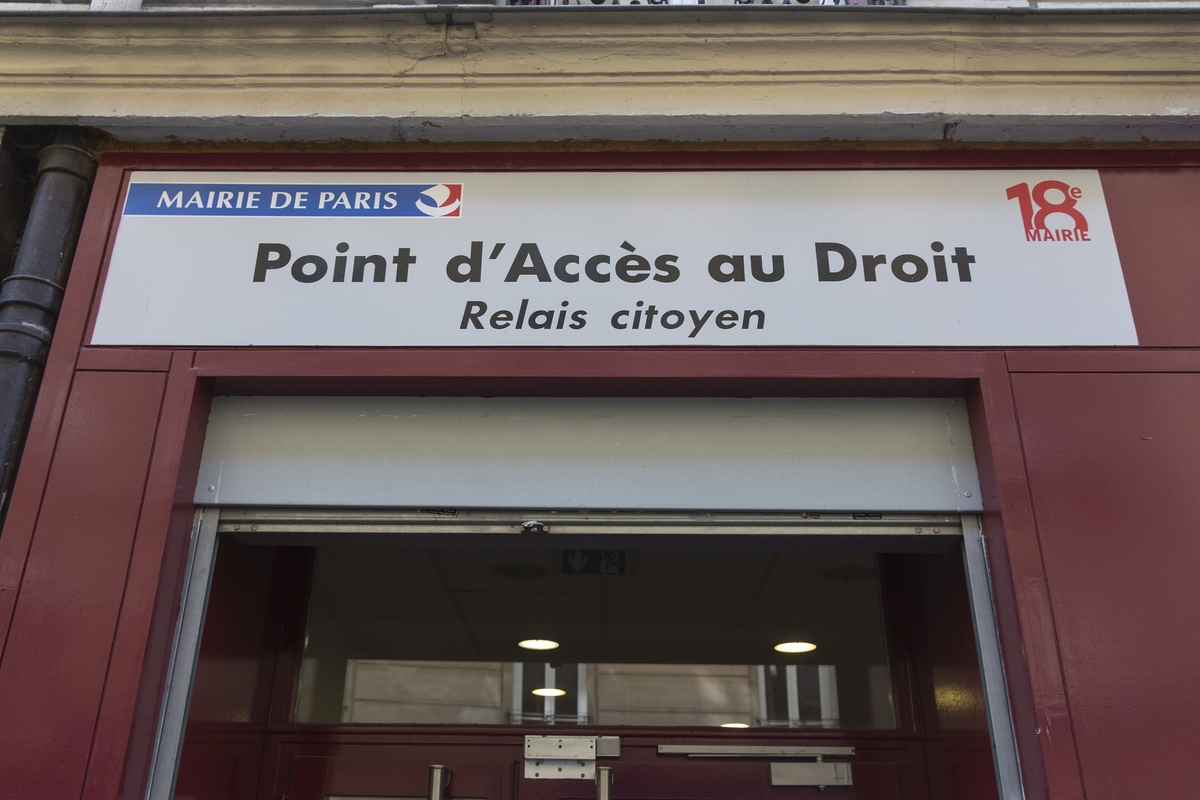
Legal Access Drop-in Sessions (PAD). At PADs, volunteer lawyers see people for free. No appointment needed at some sessions. They can:
- Review your account
- Advise you on evidence to bring
- Explain your rights
Legal access points in CADA. If you are housed in a CADA (Centre d'Accueil pour Demandeurs d'Asile – Asylum Seeker Reception Centre), there are often legal drop-in sessions on-site.
Law houses. Many towns have law houses with free consultations. Some have specific slots for asylum seekers.
If you need to appeal before the Cour Nationale du Droit d'Asile (CNDA), you need a lawyer. Good news: you are entitled to legal aid. The State pays your lawyer. Completely. You pay nothing. Even if you have no income. Even if you are in an accelerated procedure.
How to find a lawyer?
Associations can direct you to lawyers specialising in asylum law. They know the CNDA well. They know how to argue the case.
Do not take just any lawyer. Asylum law is highly specialised.
PASS centres are free medical consultations in hospitals. You do not need a Carte Vitale. You pay nothing. You will find:
- General practitioners
- Nurses
- Social workers
- Sometimes psychologists
Some association health centres offer free consultations for asylum seekers:
- Médecins du Monde
- Croix-Rouge
- Comede (for victims of violence)
Fleeing your country is a trauma. Telling your story again and again is painful. Structures offer free and adapted psychological support:
- Comede (Comité pour la santé des exilés)
- Centre Primo Levi
- Psychologues du Monde
Important to know: Psychological care can also serve as evidence for your file (medical certificate of trauma).
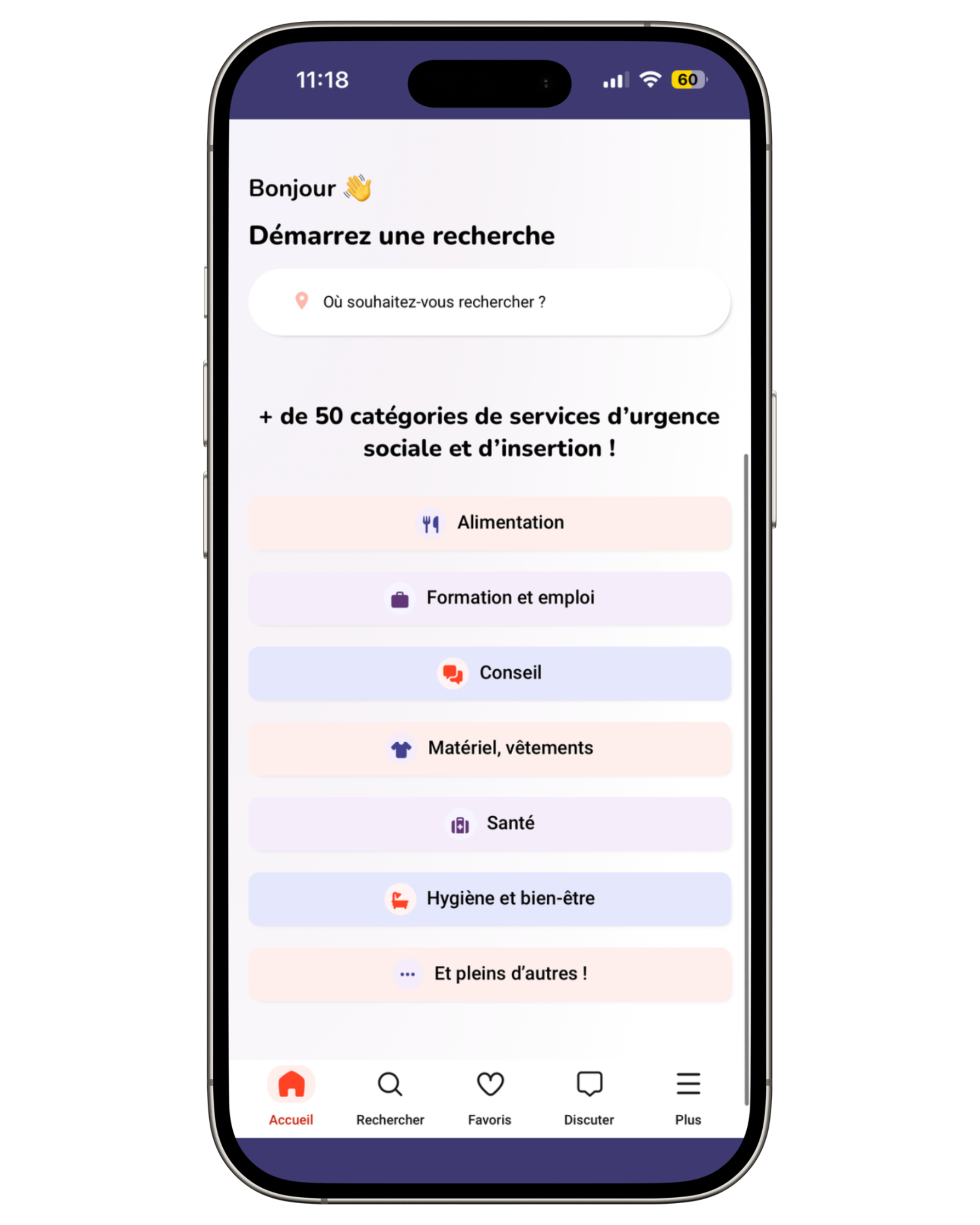
You have just read a lot of information. But how do you know which ones exist near where you are? That is exactly what Soliguide is for.
Soliguide is a free app, and also a website available in several languages: French, English, Arabic...
You can search for services near you in your language. All free of charge.
How to use Soliguide as an asylum seeker?
1. Download Soliguide (Google Play Store or App Store) or go to soliguide.fr
2. Choose your language at the top of the screen
3. Search for what you need: "asylum lawyer", "French classes", "accommodation", "PASS healthcare", "food distribution"
4. Enter your town
5. You will see all available structures with their addresses, opening hours and phone numbers
Download the app now. Search for the help you need. Contact the structures closest to you.