
Access to health insurance is essential to ensure that you and your loved ones can receive necessary medical care without worrying about the costs. Whether you are an employee, self-employed, a student, or job hunting, there are solutions tailored to every situation. Here is a guide to help you obtain health coverage.
In France, the healthcare system offers several types of health coverage. Social Security, through the national health insurance system (Assurance Maladie), is the primary source of coverage for the majority of residents. It covers a portion of medical expenses, medications, and hospitalizations. To supplement this basic coverage, it is recommended to sign up for a supplementary health plan (mutuelle) that reimburses expenses not covered by Social Security.
Anyone residing in France on a stable and regular basis is entitled to health coverage. Employees are automatically covered by the national health insurance system through their contributions. Self-employed individuals must register with the Social Security for the self-employed (SSI). Students are covered by the national health insurance system upon enrollment in a higher education institution. For those who are unemployed, it is possible to benefit from the Complementary Universal Health Coverage (CMU-C), subject to income requirements.
To obtain health insurance, follow these steps:
When should you consult a social worker?
In certain situations, consulting a social worker can be very beneficial. These professionals can assist you with administrative procedures, particularly for obtaining the CMU-C or State Medical Aid (AME). They are also there to guide you toward the appropriate services and provide information on your rights and available assistance.
If you do not have health insurance and cannot afford to pay a doctor, it is still possible to receive medical care in France.
Once your situation has been assessed and you have met with a social worker, you may be eligible for Healthcare Access Points (PASS)without having to pay for medical costs.
Depending on your healthcare needs and the services offered by the PASS, you may be able to schedule an appointment with a general practitioner (or a dentist, ophthalmologist, gynecologist, etc.), receive care from a nurse, and get prescriptions for medication. In the event of hospitalization, if you do not have health insurance and cannot pay the hospital bill, you should ask to meet with a hospital social worker. Depending on your situation, they may be able to help you obtain health coverage or, if you are not eligible, request that your care be covered by the Urgent and Vital Care scheme. In cases of emergency, hospitals can provide you with free care.
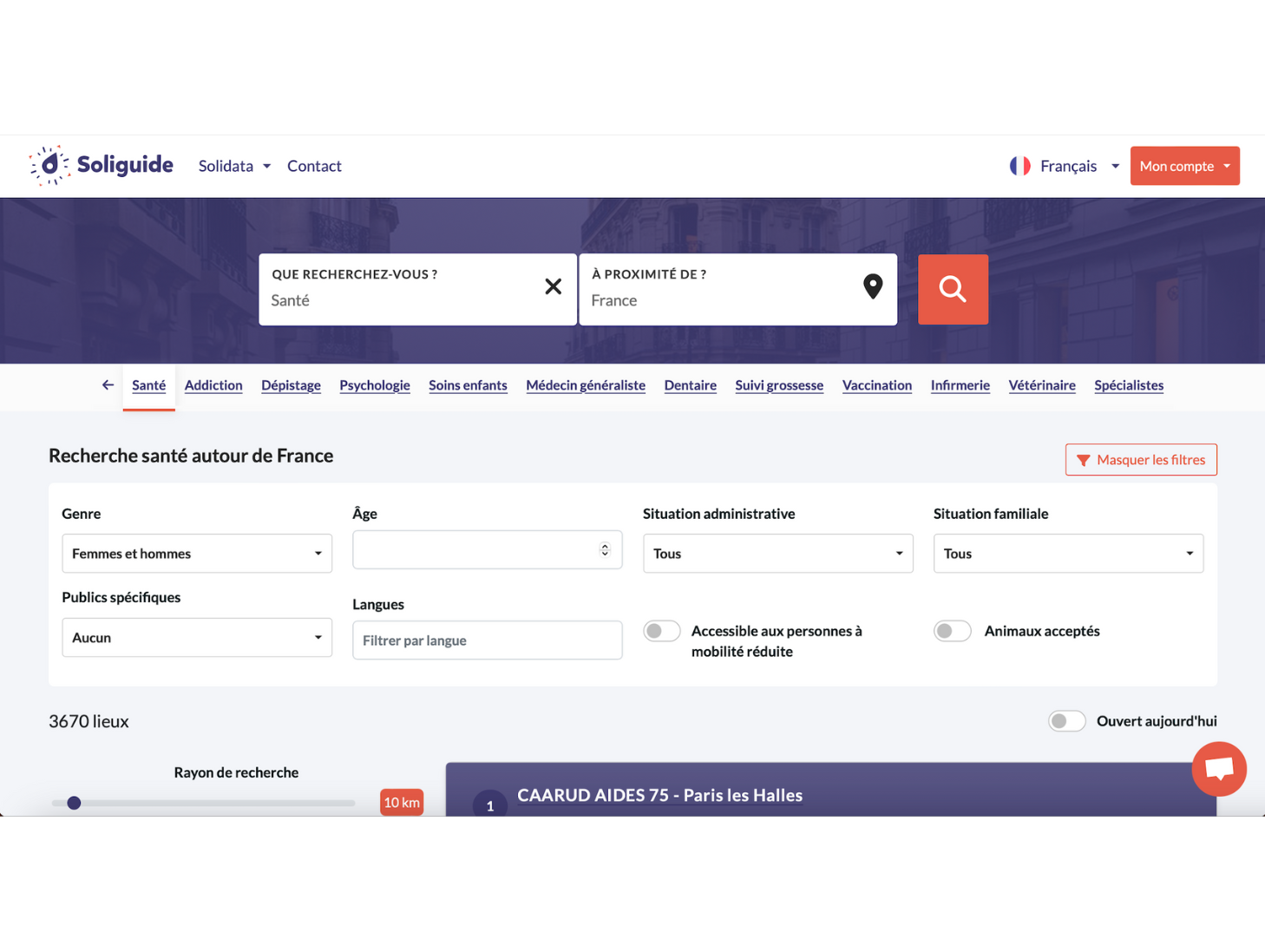
For more information on health coverage, check out our practical guides on Soliguide.