
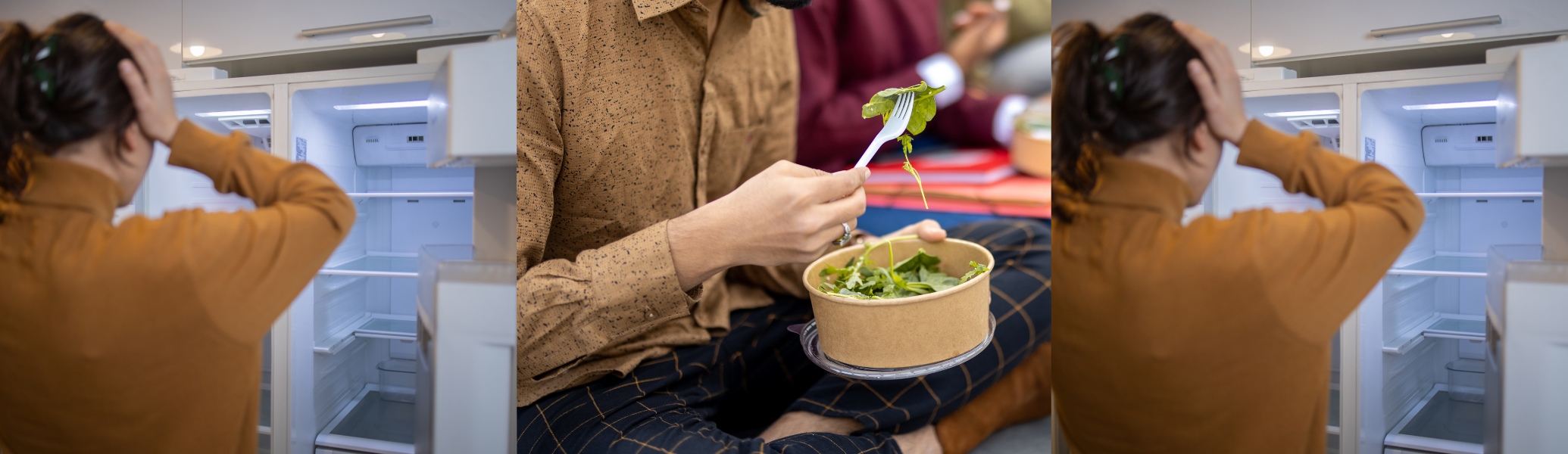
Hit by inflation, many young people have been forced to turn to food aid for the start of the 2022 academic year. Between inflation and the pandemic, many factors are weighing on student budgets, making food aid a necessity.
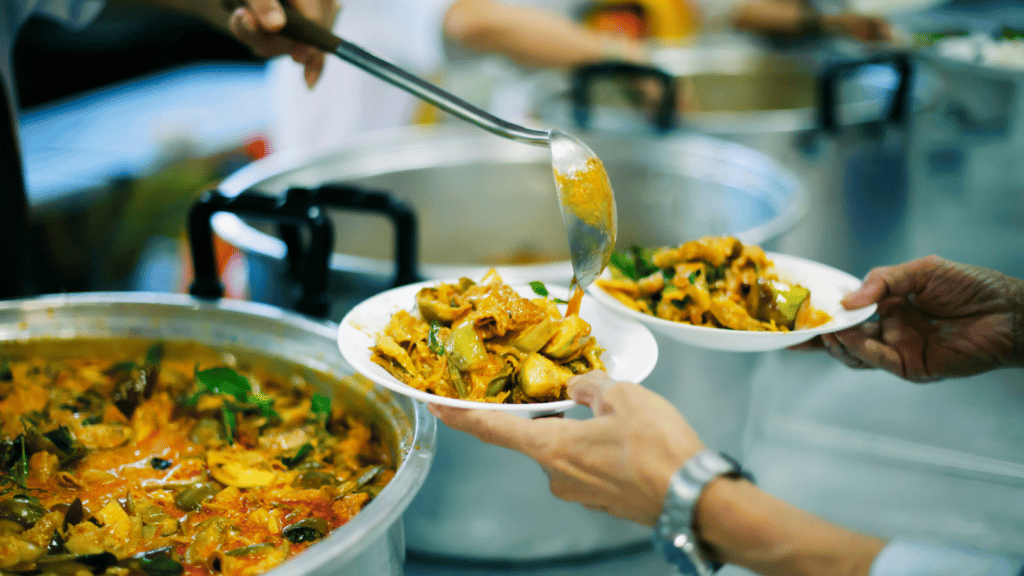
Food aid helps to combat food insecurity through the distribution of food supplies as well as support for those receiving assistance. Food aid is more than just emergency support; it is also a way to restore social connection.
Food aid can take various forms such as distributing food parcels, providing meals in community kitchens or through street outreach, offering access to social grocery stores, or subscriptions to vegetable boxes…
This food aid is provided by a large number of stakeholders via non-profit networks (such as Les Restos du Cœur) and municipal and inter-municipal social action centers (CCAS and CIAS).
Other solidarity initiatives also exist in the region, such as solidarity cooperatives, community hubs for meeting and sharing, financial aid, and practical guides for eating for free or on a tight budget.

The pandemic is one of the main factors driving the need for food assistance. Students have found themselves more isolated or have sometimes lost their student jobs as a result of the pandemic and a decrease in support due to travel restrictions (such as the inability to return home to their parents).
Inflation is also responsible for the growing demand for food assistance among young people. It goes hand in hand with the pandemic. According to the FAGE (General Federation of Student Associations) the cost of living has reportedly risen by 7.38% compared to last year. The same observation applies to UNEF (National Union of Students of France), which estimates that the cost of living increased by 6.47% in 2022 for students, which represents an additional €428.22 in annual out-of-pocket expenses for students. Rising costs in other areas are putting a strain on students' grocery budgets.
These complex situations reduce students' financial resources and push young people to seek food assistance, even though certain barriers still exist.

Non-take-up of food assistance is caused by a lack of awareness of the aid, by choice or by necessity.
This lack of awareness covers several areas, affecting both lack of knowledge about the system and access requirements and identification.
Non-take-up can also be a matter of choice. We can distinguish between non-take-up by choice linked to past experience or to misconceptions about food aid.
Finally, non-take-up is sometimes due to various constraints.
All of these factors constitute barriers to requesting food aid but must not prevent young people from seeking this helpIt is in this spirit of democratization that Solinum provides its solidarity guide: Soliguide.
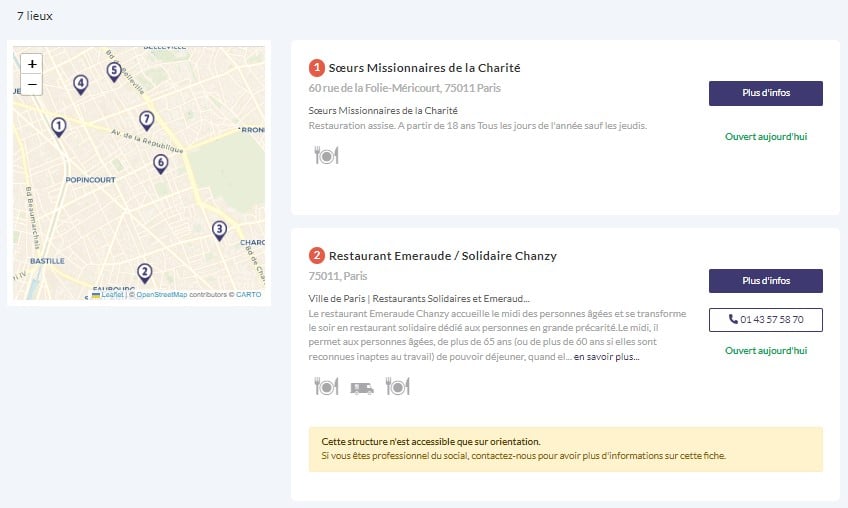
To address these barriers, Solinum decided to create Soliguide. It is available online via the website, an app, an API, and printable fact sheets.
Soliguide is a platform that lists a large number of social service organizations in France. You can find hot meal distributions, social grocery stores, or food parcels in your desired location. Simply enter your need "meal distribution" for example, as well as their location "11th arrondissement of Paris" and the platform will suggest a list of organizations offering the requested service.
This platform streamlines referrals and simplifies access to social emergency services, such as food aid.
By centralizing and frequently updating information, Soliguide aims to be an innovative response to current social work challenges.
Food aid is becoming a critical issue for students at the start of the 2022 academic year, and will be even more so with the arrival of winter and rising energy prices. Soliguide offers students an innovative and accessible solution.
Sources:
Government website – Solidarity and Health website
AREAS and ORS report – Non-take-up and opting out of food aid
INSEE study (2020-2021) – The health crisis has exacerbated food insecurity among aid recipients
Survey by the association Co-p1 – Students receiving food parcels