
This guide is here to help you. Please note it does not replace human support, but it gives you the keys to move forward, step by step.
If you are already in France, the first step upon arrival is to go to a SPADA (Structure de Premier Accueil pour Demandeurs d'Asile – First Reception Centre for Asylum Seekers), in the region where you plan to live and at the relevant Prefecture. This is where your asylum application will be pre-registered. You will be asked questions about your identity, your background and the reasons why you are leaving your country.
Important: you cannot go directly to the OFPRA or the prefecture without going through this step first.

Once your application has been registered at the Prefecture (SPADA/GUDA), you will receive an asylum application certificate and a form to complete.
The certificate is valid for 6 to 10 months and authorises you to remain temporarily in the country.
You then have 21 days to send your complete file to the OFPRA (Office Français de Protection des Réfugiés et Apatrides – French Office for the Protection of Refugees and Stateless Persons), which is the body that examines all asylum applications in France. This file must include the completed and signed application form, along with all supporting documents.2
The OFPRA will then invite you to an interview to hear your case directly. Throughout the procedure, you are entitled to the ADA (Allocation pour Demandeur d'Asile – Asylum Seeker Allowance), approximately €6.20 per day for a single person, increased by €7.40 if you have no housing solution.3
At the end of the review, the OFPRA may grant you refugee status, subsidiary protection, or reject your application.
In case of refusal, you have the right to appeal before the CNDA (Cour Nationale du Droit d'Asile – National Court of Asylum Law). It is strongly advised to be supported by a lawyer or an association at this stage.1, 4
If your application is accepted, go immediately to the prefecture with the OFPRA or CNDA decision. They must issue within 8 days a receipt stating "recognised refugee", which authorises you to work and access all your social rights.
As soon as your refugee status is recognised, you can request to be referred to a Temporary Housing Centre (CPH). This type of structure offers temporary accommodation, social support, and assistance with administrative procedures. To access it, you must contact the OFII (Office Français de l'Immigration et de l'Intégration) or a social worker.
Important: places are limited and waiting times can be long. If you are in an emergency situation, call 115 (free number, 24/7) to request emergency accommodation.5
As a recognised refugee, you have the right to apply for social housing. Applications are made online at: demande-logement-social.gouv.fr: you will need a valid identity document, proof of address and your latest tax notice.
The AGIR (Accompagnement Global et Individualisé des Réfugiés – Comprehensive and Individualised Support for Refugees) programme is designed for you: it supports the most vulnerable refugees for up to 24 months in accessing housing, employment and rights, through local referents.6
Check with your prefecture or a local association to find out if this programme is active in your department.
Once housed, you can apply for APL (Aide Personnalisée au Logement – Personalised Housing Assistance) or ALS (Allocation de Logement Social – Social Housing Allowance) from the CAF, with no waiting period if you have a valid residence permit and a regulated rental.7 You can also apply for the FSL (Fonds de Solidarité pour le Logement – Housing Solidarity Fund), managed by the Departmental Council, to help pay the security deposit or first energy bills.
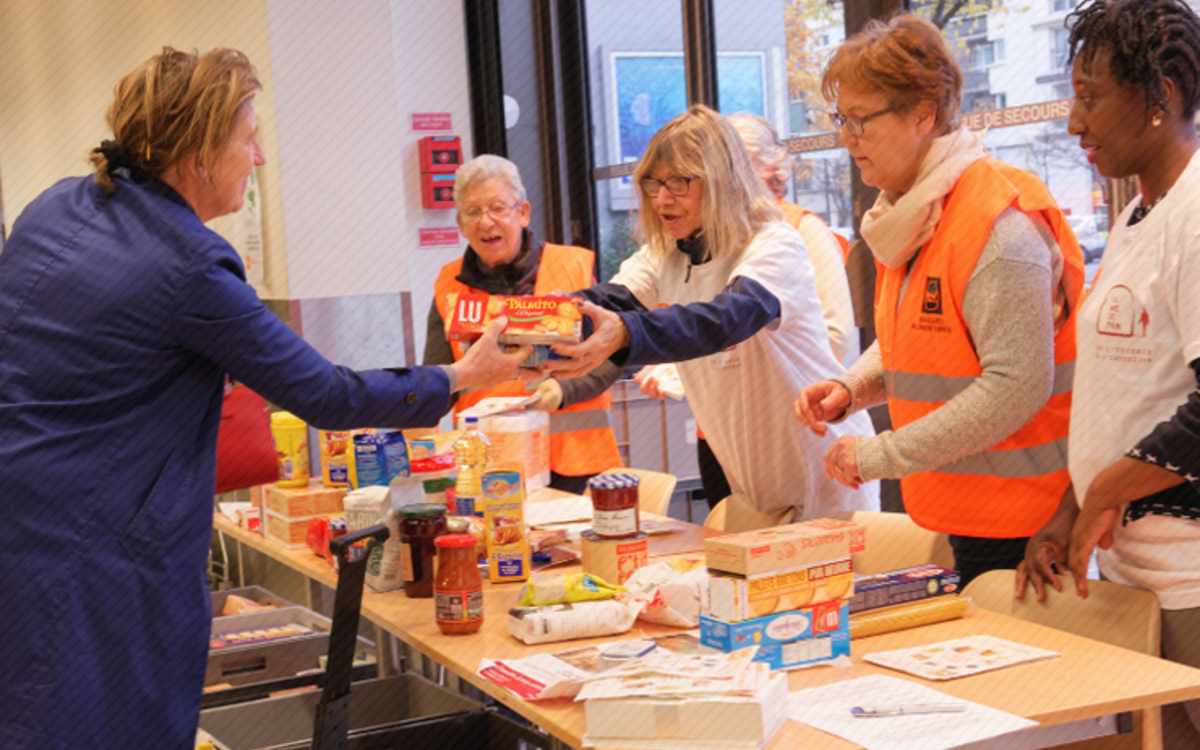
Throughout France, organisations distribute food for free or at very low prices. Food distributions redistribute supplies. The Croix-Rouge, Secours Catholique and Restos du Cœur also offer regular distributions, often without any status requirement.8
Social and solidarity grocery shops allow the purchase of food products at greatly reduced prices (between 10 and 30% of the normal price) subject to means testing. Access generally requires only a proof of situation (residence permit, CAF certificate or domiciliation certificate).8
The RSA (Revenu de Solidarité Active – Active Solidarity Income) is open to recognised refugees from the moment status is obtained, with no waiting period.
The amount is approximately €635 per month for a single person (2026). It is applied for directly at the CAF or MSA on caf.fr.7 The RSA can be supplemented by the activity bonus if you work.
If you have children, you may also benefit from family allowances and the birth bonus, with no waiting period after status recognition.9
Structures vary by town and neighbourhood. To find the nearest distribution or social grocery shop, with up-to-date opening hours and contact details, use Soliguide: simply enter your town or postcode in the "food" category.
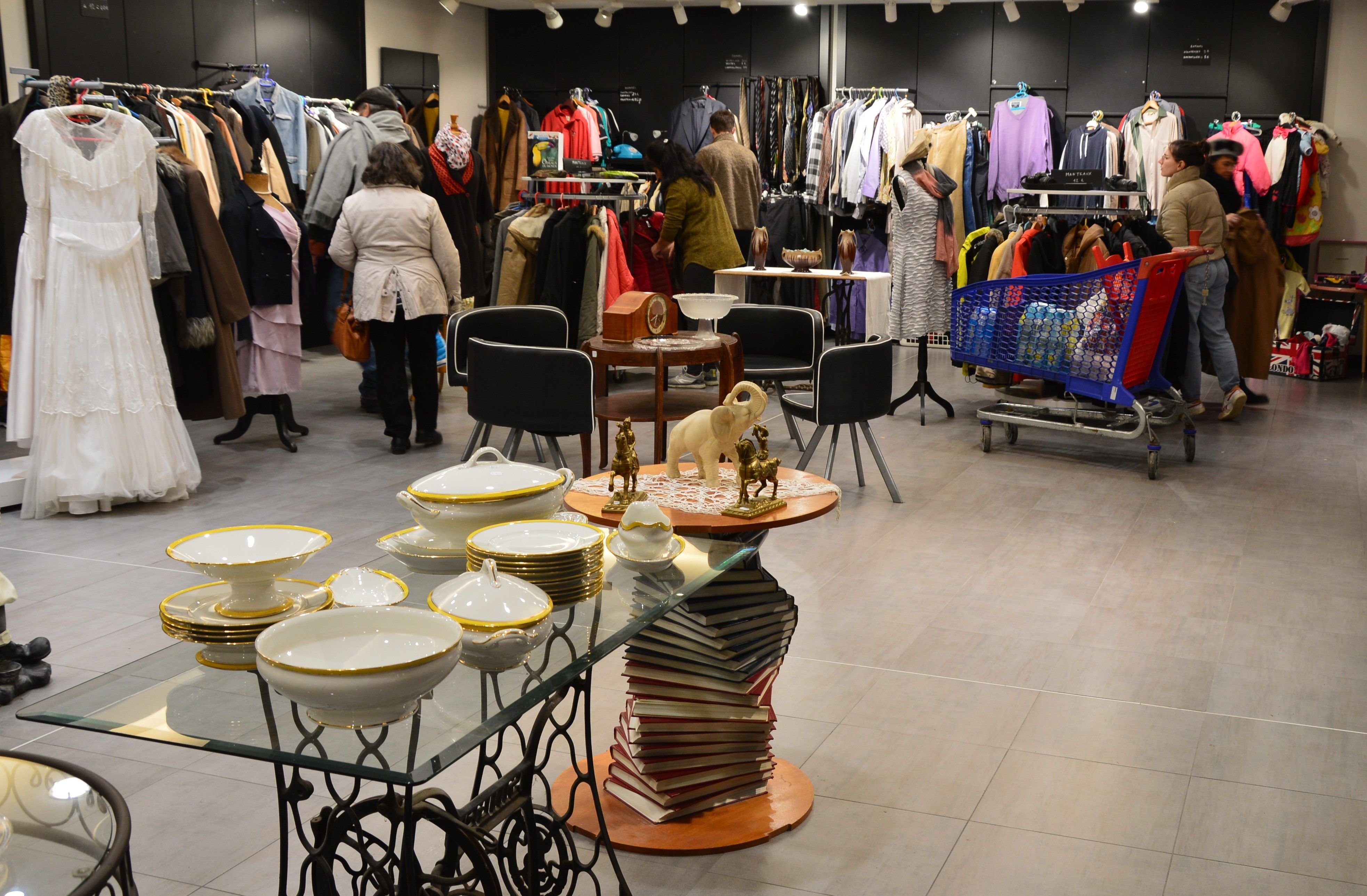
To find clothing at free or very low prices, the solidarity clothes banks of the French Red Cross are present in almost every department.
Emmaüs also has solidarity shops throughout France, where clothing, shoes and household linen are available for a few euros. Le Secours Catholique also offers clothes banks, often accessible via referral from a social worker.11
To find the nearest clothes bank or solidarity shop, find them on Soliguide in the "clothing" section.
Ressourceries and recycleries (recycling shops) offer furniture and everyday items in very good condition at very low prices. Emmaüs also collects and resells furniture and household appliances.
Some associations specialising in refugee support, such as France Terre d'Asile or local associations, also organise "installation kits" for people moving into their first home. Ask your social referent or the association supporting you.
To receive the RSA, CAF allowances or a salary, you need a bank account. In France, this is a right guaranteed by law: no bank can refuse you. If a bank refuses, ask for a refusal letter and contact the Banque de France (3414), which is obliged to designate a banking institution for you.6 You can also open an account at La Poste, accessible with a simple proof of address or at tobacco shops.
Soliguide lists all available support structures in your area for free: food, housing, clothing, social support, health… Enter your town or postcode to find available resources near you in seconds, with up-to-date opening hours and contact details.
🪄 Search for what you need on Soliguide → soliguide.fr
1. France Terre d'Asile Asylum seekers: the steps
2. OFPRA - Step 3: the OFPRA
3. Info.gouv.fr - A more effective asylum procedure
4. Asile en France - What to do after the OFPRA decision?
5. Domasile.info - I am a refugee, what are my social rights?
6. Direction Générale des Étrangers en France - The AGIR programme
7. Démarches Étrangers - CAF for foreigners 2026: what assistance and how to apply
8. Mes-Allocs - Support for immigrants: the complete guide to all available schemes
9. Asile en France - Rights of beneficiaries of international protection